There are dogs that enter your life for a few years.
And then there are dogs that change your life forever.
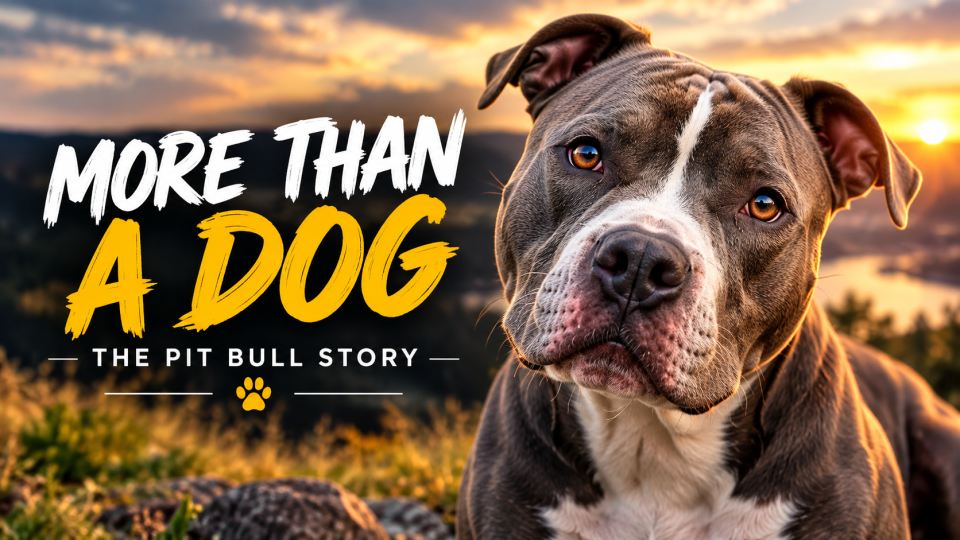
For millions of families around the world, Pit Bulls are more than pets. They are companions, protectors, playmates, exercise partners, and members of the family.
Yet few dogs have been surrounded by as many stereotypes and misunderstandings.
Behind the strong body, powerful jaw, and serious expression is often a dog that simply wants what every other dog wants: love, attention, playtime, and a safe place to call home.
A History That Is Often Forgotten
The term "Pit Bull" can refer to several closely related breeds and mixes, including dogs with American Pit Bull Terrier heritage. Their history is connected to 19th-century dogs developed from Bulldog and Terrier lines.
These dogs were valued for strength, athleticism, determination, and their close relationship with people.
As generations passed, their roles changed.
They became farm dogs, working dogs, companions, and family pets.
In many American communities, dogs of this type were once viewed as symbols of courage and loyalty rather than the negative stereotype that surrounds them today.
Their history is complicated, but one thing is important to remember:
A dog's past does not automatically determine its future.
More Than a Tough Appearance
Walk into a room with a Pit Bull and the first thing many people notice is its appearance.
The muscular body.
The powerful head.
The confident posture.
But spend a little time with one and you may discover something completely different.
A goofy personality.
A dog that wants to sit on your lap despite being far too big.
A companion that follows you from room to room.
A dog that can turn an ordinary afternoon into a game.
And sometimes, a dog that seems convinced it is still a tiny puppy.
Their appearance may look intimidating to some people, but appearance alone cannot tell you everything about an individual dog's temperament.
The Bond Between a Pit Bull and Its Human
One of the most remarkable things about many Pit Bulls is the bond they can develop with their owners.
They often enjoy human interaction and can be extremely affectionate.
Some want to be next to their people every minute of the day.
If you sit on the couch, they want to sit beside you.
If you walk into another room, they may follow.
If you go outside, they may already be waiting at the door.
That loyalty is one of the reasons so many owners describe their Pit Bulls as family rather than simply pets.
The Puppy That Nobody Wanted
Imagine a small puppy sitting alone in a shelter.
People walk past the kennel.
Some stop.
Some look.
Some immediately move on.
Maybe the puppy has the wrong color.
Maybe its body looks too strong.
Maybe someone has already decided what kind of dog it must be simply because of its appearance.
But the puppy doesn't know any of that.
It only knows that it wants someone to come back.
Someone to say:
"You're coming home with me."
For many rescue dogs, that moment can change everything.
A safe home, proper training, veterinary care, patience, exercise, and affection can give a dog the opportunity to become the companion it was always capable of being.
What Actually Shapes a Dog?
Breed can influence physical characteristics and certain behavioral tendencies, but an individual dog's behavior is influenced by many factors.
Early socialization matters.
Training matters.
Environment matters.
Health matters.
Daily experiences matter.
And responsible ownership matters enormously.
A well-cared-for dog still needs boundaries, supervision, exercise, and appropriate training.
That is true for Pit Bulls just as it is for every other powerful dog.
Strength makes responsible ownership especially important.
The Goofy Side Nobody Sees
There is another side of Pit Bulls that rarely appears in serious discussions about the breed.
The comedian.
The couch potato.
The blanket thief.
The dog that destroys a toy and then proudly brings you the remains.
The dog that believes every visitor came specifically to see them.
And the dog that can spend ten minutes trying to fit an entire body onto a tiny dog bed.
This is the side owners know best.
Behind the stereotypes is often a remarkably expressive dog with a huge personality.
A Second Chance Can Change Everything
Every rescue story begins with a dog that needs someone to believe in it.
Some Pit Bulls are surrendered because their owners can no longer care for them.
Others are rescued from neglect.
Some have spent months or even years waiting for adoption.
But shelters and rescue organizations regularly see these dogs transform when they receive stability, care, and patience.
The frightened dog becomes curious.
The nervous dog begins to trust.
The energetic dog learns structure.
And eventually, the dog that once waited behind a kennel door may be sleeping peacefully on someone's couch.
That transformation is one of the most beautiful parts of rescue.
The Real Story
The real story of the Pit Bull isn't simply about strength.
It is about responsibility.
It is about judging an individual dog by its behavior rather than making assumptions based only on appearance.
It is about understanding that powerful dogs require knowledgeable owners.
It is about giving rescue dogs opportunities while also recognizing the importance of safe handling, training, socialization, and responsible care.
And most importantly, it is about understanding that behind every dog is an individual personality.
A Dog Is Not a Stereotype
The next time you see a Pit Bull, look beyond the muscles.
Look at the individual dog.
Maybe you'll see a playful puppy.
Maybe you'll see an old rescue dog enjoying a peaceful afternoon.
Maybe you'll see a goofy family companion.
Maybe you'll see a dog waiting for its forever home.
Every dog has a story.
Some stories begin with difficult chapters.
But that doesn't mean the ending has already been written.
Sometimes, all a dog needs is someone willing to turn the page.
Real dogs. Real stories. Real love.